Pages

Monday, 2 July 2018

This could be Apple’s next iPhone USB-C fast charger

Right now, the cable that comes with a new iPhone does not plug into a new MacBook Pro without a dongle. #donglelife is for real. If this leak is correct, though, that wrong might soon be righted.

Photos have surfaced showing what is an engineering prototype of an Apple 18 W USB-C charger, which is supposedly to be bundled with the next iPhone. If correct, this will let owners take advantage of the iPhone’s fast charging capabilities without purchasing anything else. Plus, it will let users connect the iPhone to a MacBook Pro out of the box.

This rumor surfaced last year, too, though no photos ever surfaced to back up the claim.

If true, this adapter will mark the first major change in the iPhone’s wall charger. Apple has long bundled a 5W charger with the iPhone. It works fine, but does not supply the phone with the necessary power to charge at its fastest possible speed. Even if the photos here show something other than an official Apple product, chances are Apple is readying something similar. Previous leaks show something similar.

Apple included fast charging in the iPhone 8, iPhone 8 Plus and iPhone X but didn’t include the necessary charger to take advantage of the technology. Owners have to buy a third party charger of the $50 30W charger from Apple.


This could be Apple’s next iPhone USB-C fast charger was first posted on https://techcrunch.com/gadgets/

OnePlus 6 Red goes on sale July 10

Folks riding the OnePlus bandwagon will be pleased to learn that the phone maker today introduced a red version of the OnePlus 6.

The company is calling the phone the OnePlus 6 Red, and the new model follows on the success of the OnePlus 5T Lava Red.

Here’s what OnePlus CEO Pete Lau had to say in a statement:

Deciding on this color was not without its challenges. We see individual colors as a way to express certain feelings or ideas. To us, red exudes enthusiasm and personality. It also represents an inner confidence and courage. There is a kind of power in red, which the OnePlus logo has always tried to articulate. We hope you feel similarly empowered when you hold the OnePlus 6 Red this summer.

The OnePlus 6 debuted in May with a starting price of $529. Specs include a 6.28-inch display at a 19:9 aspect ratio, a Snapdragon 845 chip, 6GB of RAM and 64GB of storage, and Oxygen OS on the front-end.

OnePlus has impressed with its ability to remain competitive in a landscape where Apple and Samsung reign supreme. Even HTC, the old king of the smartphone castle, has today announced that it’s cutting 1,500 jobs.

The OnePlus 6 Red will be available starting July 10, with sales in India beginning on July 16. The price will be the same as other OnePlus 6 variants.


OnePlus 6 Red goes on sale July 10 was first posted on https://techcrunch.com/gadgets/

HTC is gone

Gather around, campers, and hear a tale as old as time.

Remember the HTC Dream? The Evo 4G? The Google Nexus One? What about the Touch Diamond? All amazing devices. The HTC of 2018 is not the HTC that made these industry-leading devices. That company is gone.

It seems HTC is getting ready to lay off nearly a quarter of its workforce by cutting 1,500 jobs in its manufacturing unit in Taiwan. After the cuts, HTC’s employee count will be less than 5,000 people worldwide. Five years ago, in 2013, HTC employed 19,000 people.

HTC started as a white label device maker giving carriers an option to sell devices branded with their name. The company also had a line of HTC-branded connected PDAs that competed in the nascent smartphone market. BlackBerry, or Research in Motion as it was called until 2013, ruled this phone segment, but starting around 2007 HTC began making inroads thanks to innovated touch devices that ran Windows Mobile 6.0.

In 2008 HTC introduced the Touch line with the Touch Diamond, Touch Pro, Touch 3G and Touch HD. These were stunning devices for the time. They were fast, loaded with big, user swappable batteries and microSD card slots. The Touch Pro even had a front-facing camera for video calls.

HTC overplayed a custom skin onto of Windows Mobile making it a bit more palatable for the general user. At that time, Windows Mobile was competing with BlackBerry’s operating system and Nokia’s Symbian. None were fantastic, but Windows Mobile was by far the most daunting for new users. HTC did the best thing it could do and developed a smart skin that gave the phone a lot of features that would still be considered modern.

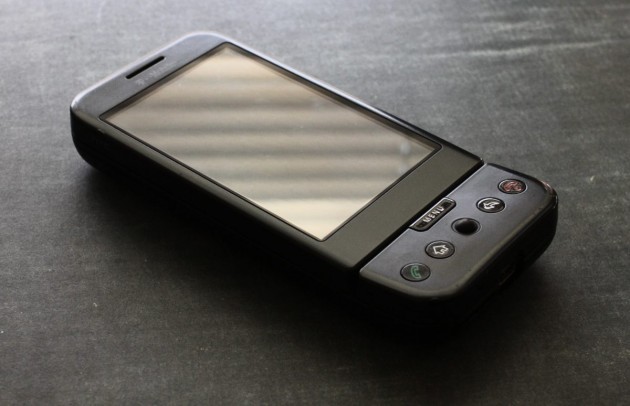
In 2009 HTC released the first Android device with Google. Called the HTC Dream or G1, the device was far from perfect. But the same could be said about the iPhone. This first Android phone set the stage for future wins from HTC, too. The company quickly followed up with the Hero, Droid Incredible, Evo 4G and, in 2010, the amazing Google Nexus One.

After the G1, HTC started skinning Android in the same fashion as it did Windows Mobile. It cannot be overstated how important this was for the adoption of Android. HTC’s user interface made Android usable and attractive. HTC helped make Android a serious competitor to Apple’s iOS.

In 2010 and 2011, Google turned to Samsung to make the second and third flagship Nexus phones. It was around this time Samsung started cranking out Android phones, and HTC couldn’t keep up. That’s not to say HTC didn’t make a go for it. The company kept releasing top-tier phones: the One X in 2012, the One Max in 2013, and the One (M8) in 2014. But it didn’t matter. Samsung had taken up the Android standard and was charging forward, leaving HTC, Sony, and LG to pick from the scraps.

At the end of 2010, HTC was the leading smartphone vendor in the United States. In 2014 it trailed Apple, Samsung, and LG with around a 6% market share in the US. In 2017 HTC captured 2.3% of smartphone subscribers and now in 2018, some reports peg HTC with less than a half percent of the smartphone market.

Google purchased a large chunk of HTC’s smartphone design talent in 2017 for $1.1 billion. The deal transferred more than 2,000 employees under Google’s tutelage. They will likely be charged with working on Google’s line of Pixel devices. It’s a smart move. This HTC team was responsible for releasing amazing devices that no one bought. But that’s not entirely their fault. Outside forces are to blame. HTC never stopped making top-tier devices.

The HTC of today is primarily focused on the Vive product line. And that’s a smart play. The HTC Vive is one of the best virtual reality platforms available. But HTC has been here before. Hopefully, it learned something from its mistakes in smartphones.


HTC is gone was first posted on https://techcrunch.com/gadgets/

OnePlus 6 Red to go on sale globally from July 10

While Jared finetunes his OnePlus 6 review, the upstart smartphone maker has announced it will soon sell the phone in a brand new color scheme. After the popularity of the Lava Red OnePlus 5T earlier this year, the red version of the OP6 will just be known as the OnePlus 6 Red.  Going on sale worldwide from […]


Come comment on this article: OnePlus 6 Red to go on sale globally from July 10


OnePlus 6 Red to go on sale globally from July 10 appeared first on http://www.talkandroid.com

Google Maps now prompts users for incident confirmation

Although Google purchased Waze a few years ago and has maintained Waze as a separate navigation app from Google Maps, the company has slowly been capitalizing on the purchase by porting features over. One area where Google has remained essentially hands off was on the incident reporting available in Waze. That may be starting to […]


Come comment on this article: Google Maps now prompts users for incident confirmation


Google Maps now prompts users for incident confirmation appeared first on http://www.talkandroid.com

Sunday, 1 July 2018

Chinese company claims its ‘laser AK-47’ can set you on fire from half a mile away

Lasers! Everybody loves them, everybody wants them. But outside a few niche applications they have failed to live up to the destructive potential that Saturday morning cartoons taught us all to expect. In defiance of this failure, a company in China claims to have produced a “laser AK-47” that can burn targets in a fraction of a second from half a mile away. But skepticism is still warranted.

The weapon, dubbed the ZKZM-500, is described by the South China Morning Post as being about the size and weight of an ordinary assault rifle, but capable of firing hundreds of shots, each of which can cause “instant carbonization” of human skin.

“The pain will be beyond endurance,” added one of the researchers.

Now, there are a few red flags here. First is the simple fact that the weapon is only described and not demonstrated. Second is that what is described sounds incompatible with physics.

Laser weaponry capable of real harm has eluded the eager boffins of the world’s militaries for several reasons, none of which sound like they’ve been addressed in this research, which is long on bombast but short, at least in the SCMP article, on substance.

First there is the problem of power. Lasers of relatively low power can damage eyes easily because our eyes are among the most sensitive optical instruments ever developed on Earth. But such a laser may prove incapable of even popping a balloon. That’s because the destruction in the eye is due to an overload of light on a light-sensitive medium, while destruction of a physical body (be it a human body or, say, a missile) is due to heat.

Existing large-scale laser weapons systems powered by parallel arrays of batteries struggle to create meaningful heat damage unless trained on targets for a matter of seconds. And the power required to set a person aflame instantly from half a mile away is truly huge. Let’s just do a little napkin math here.

The article says that the gun is powered by rechargeable lithium-ion batteries, the same in principle as those in your phone (though no doubt bigger). And it is said to be capable of a thousand two-second shots, amounting to two thousand seconds, or about half an hour total. A single laser “shot” of the magnitude tested by airborne and vehicle systems is on the order of tens of kilowatts, and those have trouble causing serious damage, which is why they’ve been all but abandoned by those developing them.

Let’s just pretend they work for a second, at those power levels — they use chemical batteries to power them, since they need to be emptied far faster than lithium ion batteries will safely discharge. But let’s say even then that we could use lithium ion batteries. The Tesla Powerwall is a useful comparator: it provides a few kilowatts of power and stores a few kilowatt-hours. And… it weighs more than 200 pounds.

There’s just no way that a laser powered by a lithium-ion battery that a person could carry would be capable of producing the kind of heat described at point blank range, let alone at 800 meters.

That’s because of attenuation. Lasers, unlike bullets, scatter as they progress, making them weaker and weaker. Attenuation is non-trivial at anything beyond, say, a few dozen meters. By the time you get out to 800, the air and water the beam has traveled through enough to reduce it a fraction of its original power.

Of course there are lasers that can fire from Earth to space and vice versa — but they’re not trying to fry protestors; all that matters is that a few photons arrive at the destination and are intelligible as a signal.

I’m not saying there will never be laser weapons. But I do feel confident in saying that this prototype, ostensibly ready for mass production and deployment among China’s anti-terrorist forces, is bunk. As much as I enjoy the idea of laser rifles, the idea of one that weighs a handful of pounds and fires hundreds of instantly skin-searing shots is just plain infeasible today.

The laser project is supposedly taking place at the Xian Institute of Optics and Precision Mechanics, at the Chinese Academy of Sciences. Hopefully they give a real-world demonstration of the device soon and put me to shame.


Chinese company claims its ‘laser AK-47’ can set you on fire from half a mile away was first posted on https://techcrunch.com/gadgets/

Spotify Lite shows up in the Play Store, offers less data usage for music streaming

A new Spotify Lite app has surfaced in the Play Store, continuing the trend of apps offering slimmed down versions for users with slower phones or more constrained data caps. Spotify Lite is no exception, but like some of those other apps, that means it has some geographical and device restrictions, too. As it stands, […]


Come comment on this article: Spotify Lite shows up in the Play Store, offers less data usage for music streaming


Spotify Lite shows up in the Play Store, offers less data usage for music streaming appeared first on http://www.talkandroid.com